
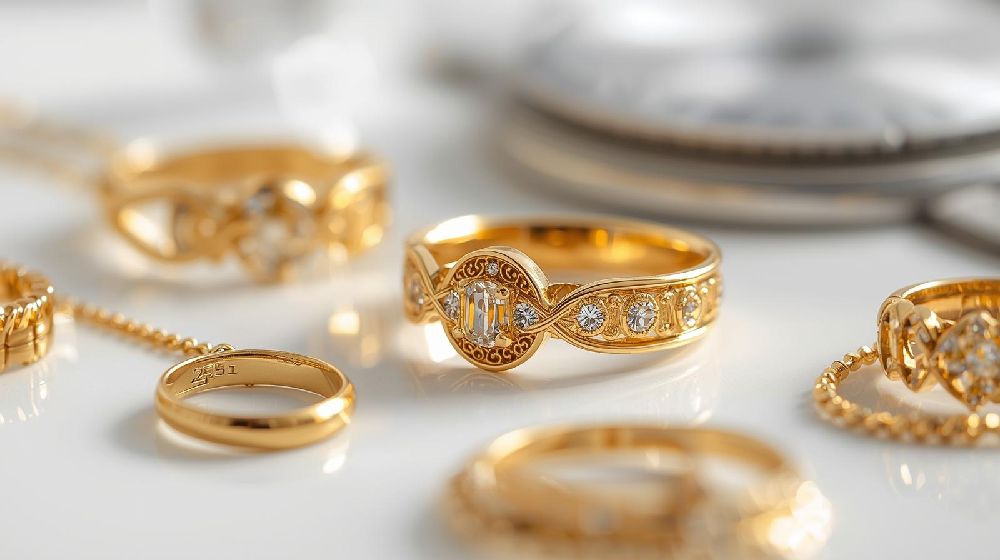
 In 22K gold jewelry manufacturing, weight is not just a number — it is value, trust, and profitability. Even a small variation of 0.10 grams can impact pricing, margins, and buyer confidence. For serious manufacturers, precision weight control is a scientific process built on systems, calibration, and disciplined production methods.
At DVN Jewelry, precision gold weight control is integrated into every stage of manufacturing to ensure accuracy, consistency, and investment reliability.
Why Precision Weight Control Matters in 22K Gold
22K gold contains approximately 91.6% pure gold. Since gold is a high-value metal:
-
Small weight differences affect cost
-
Overweight production reduces margins
-
Underweight production impacts buyer trust
-
Inconsistent batches reduce export credibility
Precision weight control protects both the manufacturer and the customer.
1️⃣ Controlled Alloy Composition
The science begins with alloy preparation.
22K gold is created by mixing pure gold with specific alloy metals to achieve strength and durability. Structured alloy control includes:
-
Measured gold-to-alloy ratios
-
Calibrated digital weighing systems
-
Controlled melting temperatures
-
Batch documentation
Accurate alloy mixing ensures consistent density and predictable final weight.
2️⃣ Digital Design & CAD Optimization
Before production begins, digital design software calculates:
-
Thickness distribution
-
Hollow vs solid sections
-
Weight projection per design
-
Balance between strength and lightness
This allows manufacturers to estimate final weight even before casting or machining begins.
Proper CAD optimization prevents unnecessary gold usage while maintaining structural integrity.
3️⃣ CNC & Machine-Based Accuracy
Manual shaping can introduce variations. Precision machinery improves weight control through:
-
Micron-level cutting accuracy
-
Controlled material removal
-
Repeatable engraving depth
-
Identical replication across batches
Computer-controlled production minimizes inconsistencies that can affect weight.
4️⃣ Process-Level Weight Monitoring
Precision control is not a one-time measurement — it happens at multiple stages:
-
Raw gold issue weight
-
Post-casting weight
-
Post-machining weight
-
Pre-polish weight
-
Final finished weight
By checking weight at each stage, deviations are identified early.
5️⃣ Polishing & Finishing Control
Polishing can slightly reduce weight if not monitored. Structured finishing systems ensure:
-
Controlled buffing pressure
-
Standardized polishing duration
-
Consistent compound application
-
Minimal material removal
This protects shine quality without excessive gold loss.
6️⃣ Weight Tolerance Benchmarking
Professional manufacturers define acceptable tolerance ranges, such as:
-
±0.05g for lightweight pieces
-
±0.10g for medium-weight designs
-
Controlled variance percentages
Clear tolerance benchmarks prevent unnecessary rework while maintaining strict standards.
7️⃣ Data Tracking & Batch Analysis
Advanced production systems use monthly tracking to analyze:
-
Average variance by category
-
Design-wise weight accuracy
-
Team-based performance
-
Gold loss percentage
This data-driven approach continuously improves weight precision over time.
8️⃣ Financial Impact of Weight Accuracy
Precision gold weight control delivers measurable benefits:
-
Reduced gold wastage
-
Better margin protection
-
Transparent pricing
-
Increased buyer trust
-
Stronger export reliability
In large-scale production, even minor improvements significantly impact overall profitability.
Conclusion
The science behind precision gold weight control combines metallurgy, digital engineering, machine accuracy, and disciplined quality systems. It transforms jewelry manufacturing from an art-only process into a structured, measurable operation.
Through advanced production systems and continuous monitoring, DVN Jewelry ensures that every 22K gold piece meets exact weight standards — protecting value, maintaining consistency, and strengthening long-term trust in global markets.
Precision is not just about measurement — it is about manufacturing responsibility.
- precisiongold
- ,
- goldweightcontrol
- ,
- 22kgoldjewelry
- ,
- goldweightaccuracy
- ,
- investmentgradegold
- ,
- goldvalueprotection
- ,
- weighttolerance
- ,
- goldengineering
- ,
- structuredgoldproduction
- ,
- alloycontrol
- ,
- goldmanufacturingexcellence
- ,
- cncgoldjewelry
- ,
- digitaljewelrydesign
- ,
- laserweldinggold
- ,
- bulkgoldproduction
- ,
- 22kgoldmanufacturer
- ,
- scalablegoldmanufacturing
- ,
- goldqualitycontrol
- ,
- processdrivenmanufacturing
- ,
- dvnjewelry
- ,
- advancedgoldmanufacturing
- ,
- goldproductiontechnology
- ,
- moderngoldfactory
- ,
- indiangoldmanufacturer
- ,
- premiumgoldmanufacturing
- ,
- trustedgoldmanufacturer
- ,
- exportqualitygold
- ,
- luxurygoldproduction
- ,
- goldindustryleaders
- ,
- reliablegoldsupplier