
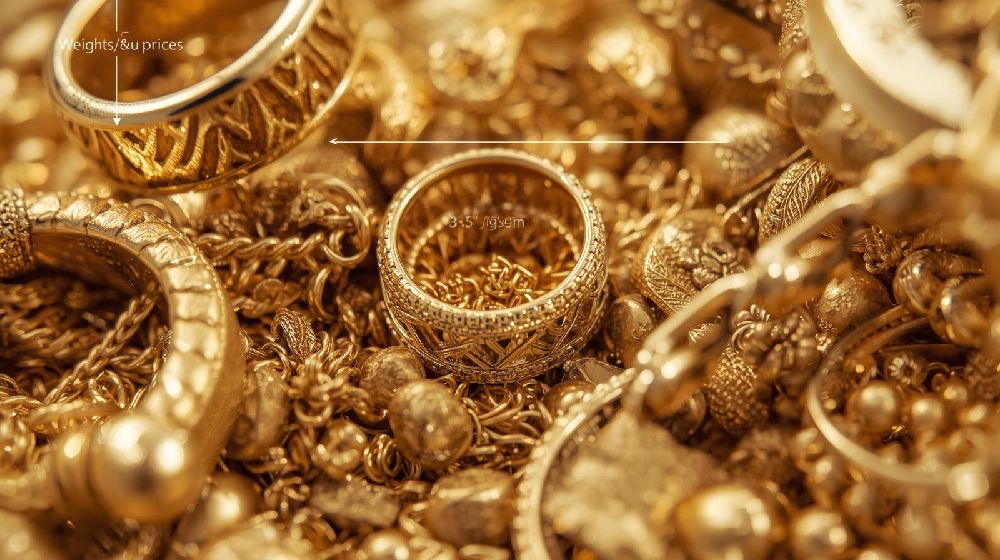
When buying gold jewelry, most people focus on design and shine. But behind every beautiful piece lies a deeper science—gold weight, density, and pricing. Understanding these factors helps customers make smarter, more transparent purchasing decisions and appreciate the true value of their jewelry.
Let’s break down these concepts in simple terms.
1. What Does Gold Weight Mean in Jewelry?
Gold weight refers to how much gold a piece contains and is usually measured in:
-
Grams (most common)
-
Milligrams (for very small items)
The weight directly impacts the price—but not all heavy jewelry is better. Design, density, and craftsmanship also play major roles.
Gross Weight vs Net Gold Weight
-
Gross Weight: Total weight of the jewelry (including stones, enamel, locks)
-
Net Gold Weight: Actual weight of gold used
Always check net gold weight, as this determines the real gold value.
2. Understanding Gold Density: Why Size Can Be Misleading
Gold is a high-density metal, meaning it is heavy even in small volumes.
What Is Density?
Density = Mass ÷ Volume
Gold has a density of about 19.3 g/cm³, making it heavier than most metals.
Why Density Matters in Jewelry
-
A small gold piece can feel heavier than expected
-
Two bangles of the same size may weigh differently
-
Hollow jewelry looks large but weighs less
-
Solid jewelry feels heavier and costs more
Modern techniques like hollow casting and CNC shaping help create bold designs without excessive weight.
3. How Gold Karat Affects Weight & Value
Gold jewelry is not always pure gold.
| Karat | Gold Purity | Density Impact |
|---|---|---|
| 24K | 99.9% | Highest density |
| 22K | 91.6% | Slightly lighter |
| 18K | 75% | Lighter, stronger |
| 14K | 58.5% | Much lighter |
Higher karat = more gold content = higher price per gram
Lower karat = more alloy metals = better durability, lower cost
4. How Gold Jewelry Pricing Is Calculated
Gold jewelry pricing is transparent when you know the formula:
Basic Price Formula
(Gold Rate per Gram × Net Gold Weight) + Making Charges + Taxes
Let’s break it down:
1. Gold Rate
-
Based on daily market prices
-
Varies by karat (22K, 18K, etc.)
2. Making Charges
Covers:
-
Design complexity
-
Manufacturing techniques (CNC, laser, handmade)
-
Finishing & polishing
-
Stone setting
Can be:
-
Per gram
-
Fixed price
-
Percentage of gold value
3. Additional Costs
-
Stone or CZ charges
-
Plating (rhodium, micro-plating)
-
GST or local taxes
5. Solid vs Hollow Jewelry: Price Differences Explained
Solid Jewelry
-
Higher weight
-
Higher cost
-
More durable
-
Traditional feel
Hollow Jewelry
-
Lower weight
-
More affordable
-
Lightweight comfort
-
Trendy large designs
Both are valuable—it depends on purpose and budget.
6. Why Two Similar Designs Can Have Different Prices
Even if two pieces look alike, price differences can occur due to:
-
Net gold weight
-
Karat purity
-
Manufacturing method
-
Finishing quality
-
Brand craftsmanship
-
Design complexity
This is why weight alone should never be the only deciding factor.
7. Smart Buying Tips for Customers
✔ Always ask for net gold weight
✔ Understand karat purity
✔ Compare making charges
✔ Choose hollow or lightweight designs for daily wear
✔ Check hallmarking for purity assurance
✔ Buy from transparent, reputed jewelers
Conclusion
Gold jewelry is a beautiful blend of art and science. Understanding gold weight, density, and pricing empowers buyers to make informed decisions and appreciate the craftsmanship behind every piece. When you know what you’re paying for, gold becomes more than a purchase—it becomes a smart investment and a lasting treasure.